
US tech giant Microsoft is in the final stages of talks with the Telangana government to set up a data centre with a total investment of Rs 15,000 crore. According to sources in the state government, the company has zeroed in on a land parcel near Hyderabad for the facility. "In the information technology (IT) space, Telangana is already seeing some major investments. "Microsoft is establishing its data centre here, and it may come out with a public announcement soon," said a source.

India's largest garment hub Tirupur continues to reel from the effects of the pandemic, with almost 10 per cent of its orders for the upcoming season getting diverted to Bangladesh, Vietnam, Cambodia and China. The sector had seen a drop of about 9 per cent in exports during the first wave, but the impact is likely to be more this time, according to industry experts. Being one of the epicentres of Covid cases in the state, a majority of manufacturing units in the textile belt were closed for almost six weeks during the second wave.

Is there more than meets the eye to Kitex Garments, the world's second-largest children's garment producer, abandoning Kerala for Telangana?

The government of Tamil Nadu on Tuesday signed a memorandum of understanding (MoUs) with 35 companies that may see investment to the tune of Rs 17,141 crore, creating employment opportunities for 55,054 people. The major companies that would be coming up with fresh investments over Rs 1,000 crore in the state include JSW Renew Energy Two, TCS, ZF Wabco and Srivaru Motors among others. JSW Renew Energy Two will be coming up with a 450 megawatt (Mw) wind power generation unit at Tuticorin, Tirunelveli, Dindigul and Tiruppur for Rs 3,000 crore. TCS will be coming up with its third phase of expansion at SIPCOT IT Park in Siruseri, ZF Wabco with an auto component unit at Kancheepuram for Rs 1,800 crore and a two-wheeler EV unit by Srivaru Motors for Rs 1,000 crore at Coimbatore.

The survey covered 1,210 IT executives and technology professionals from North America, the United Kingdom, Australia, New Zealand, Singapore and India. In India, 202 respondents from businesses with more than 500 employees across 18 industry verticals completed the survey. Overall, 89 per cent of the respondents said implementing a work-from-home policy had increased security challenges for their organisations. The risk posed by shadow IT was especially high, with 89 per cent of companies having no control over the software that employees purchase and install on their devices.

Business Standard tracks pollution levels, goods ferried by the Indian Railways and consumer visits to various categories of places, in addition to power generation and traffic numbers to understand the fast-changing situation on the ground.

'We have filed our draft red herring prospectus for a floating IPO for a net offer size of 86.6 million shares.'

Thomas Isaac has been in and out of the national news in his role as Kerala's finance minister since 2018 for various path-breaking tax initiatives. But it is 2020 that he has become more prominent, principally in the GST council.
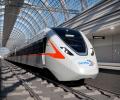
The project will be in three stages and sources indicate that the funding will be for the first stage of 107 kilometre from Sarai Kale Khan to SNB Urban Complex.

22 companies won bids for the 31 contracts on offer; 15 were new entrants to the oil and gas business. Three years on, none of them have started production.
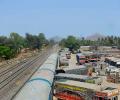
Revenue from freight operations also increased by 14 per cent to Rs 9,903 crore in September.

Going by the current market cap of Rs 83,451.15 crore, 7.33 per cent stake in BPCL is expected to be valued around Rs 6,117 crore.

'The CEA suggested that could be as high as 19 per cent.'
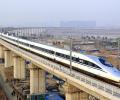
The first consortium includes Afcons Infrastructure, IRCON International and JMC Projects, while the second group of companies include NCC, Tata Projects and J. Kumar Infra Projects.

The Rail Land Development Authority has invited online bids from private players to redevelop the station into an integrated commercial, retail, and hospitality hub.

A lot of work is needed to be done on the part of the insurance sector behemoth, and the government, before it is ready for its market debut.

'The people, media and politicians are ready to listen to the troubles of Kangana Ranaut, but we are unwanted lives in the heart of Delhi.' Shine Jacob reports.

The projects - Delhi-Varanasi, Mumbai-Nagpur, Delhi-Ahmedabad, Chennai-Mysore, Delhi-Amritsar, Mumbai-Hyderabad, and Varanasi-Howrah - are expected to cost around Rs 10 trillion.

Built by the French railway technology company Alstom, it will host a 90-metre-long digital wall for train operation, said to be the second largest in Asia.

Almost all infrastructure ministries continued spending on capex throughout the lockdown, even as the Centre tried to maintain some semblance of economic normalcy.
 © 2026 Rediff.com - Investor Information - Advertise with us - Disclaimer - Privacy Policy - Sitemap - Feedback - About us - Terms of use - Grievances